Why Choose UVC Sterilization for Global Buyers?
Why Choose Uvc Sterilization for Global Buyers?
Uvc Sterilization is becoming a practical choice for buyers managing hygiene across hospitals, hotels, laboratories, and food facilities. Its appeal is direct: ultraviolet-C energy can inactivate microorganisms without leaving chemical residues on treated surfaces. A room, conveyor, or water chamber can be treated within minutes. Still, speed alone proves little.
The World Health Organization recognizes ultraviolet germicidal irradiation as a useful supplementary measure for airborne infection control, especially when ventilation is also considered. The U.S. Centers for Disease Control and Prevention describes UVGI as an additional engineering control, not a replacement for cleaning or fresh air. That distinction matters. No device is magic.
Market research also signals strong commercial interest. Grand View Research reported continued expansion in the global UV disinfection equipment market, driven by healthcare, municipal water treatment, and food processing demand. Figures vary between reports, because analysts define “UV disinfection” differently. Buyers should question impressive forecasts.
Dr. David J. Brenner, director of Columbia University’s Center for Radiological Research, has said, “Far-UVC light has the potential to be a safe and effective tool against airborne disease transmission.” His statement reflects opportunity, not a universal guarantee. Product design remains critical.
Reliable buyers examine UV-C dose, measured irradiance, lamp aging, sensor accuracy, and independent test results. They also check IEC, ISO, CE, FDA, or local requirements where applicable. Safety interlocks matter near people. Ozone claims need verification.
The best purchase is rarely the cheapest unit. It is the system that documents performance, supports maintenance, and admits its limitations. That last point is often overlooked.
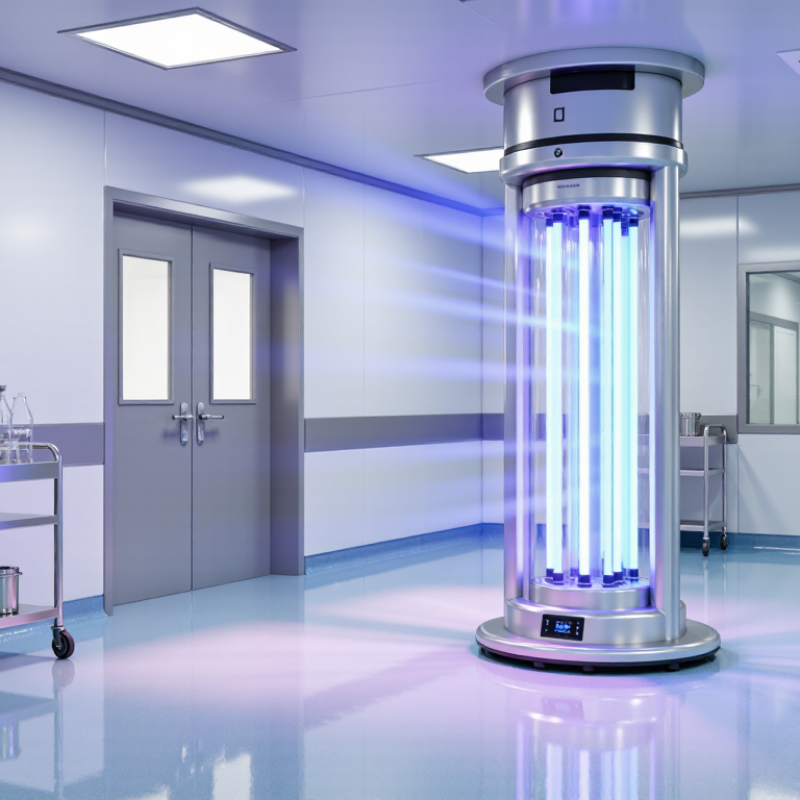
What Is UVC Sterilization and How Does It Work?
Why Choose UVC Sterilization for Global Buyers?
UVC sterilization uses short-wave ultraviolet energy to damage microbial DNA and RNA. This prevents microorganisms from reproducing. The International Commission on Illumination defines UVC as 200–280 nanometers. Its 2020 position statement confirms strong germicidal potential in this range. Many systems operate near 254 nanometers, where conventional UVC sources perform effectively.
The mechanism is simple: UVC intensity reaches a surface, water stream, or moving air, then delivers a measured dose. Dose equals intensity multiplied by exposure time. Higher intensity or longer exposure generally improves inactivation. However, shadows, dust, curved surfaces, and poor airflow can reduce performance. Real installations are less perfect than laboratory charts.
The World Health Organization warns that direct UVC exposure can injure skin and eyes. Enclosed chambers, interlocks, shielding, and verified leakage tests matter. IEC 62471 also provides a framework for evaluating photobiological safety. Buyers should request irradiance maps, dose calculations, lamp-life data, and independent test reports. A certificate alone may not prove real-world effectiveness. That is an uncomfortable point.
For global procurement, UVC offers chemical-free treatment and minimal residue. It can support air, water, and surface applications when the design matches the target environment. Yet “sterilization” should not become a careless marketing shortcut. Validation must define the organism, exposure conditions, distance, humidity, and required reduction level. A practical system is not merely bright. It is measurable, shielded, and repeatable.
Which Microorganisms Can UVC Technology Control?
Why Choose UVC Sterilization for Global Buyers?
Which Microorganisms Can UVC Technology Control?
UVC technology uses short-wavelength ultraviolet energy to damage microbial DNA or RNA. At the right dose, it can control many bacteria, including Escherichia coli, Salmonella, and Staphylococcus species. It can also reduce viruses, yeasts, and molds on exposed air, water, and smooth surfaces. This makes UVC attractive for buyers managing different environments across borders.
Not every microorganism responds equally. Bacterial spores are usually more resistant than ordinary bacteria. Some viruses also require higher doses. UVC cannot reliably treat shaded areas, dust-covered surfaces, or cloudy water. Light needs direct access. Distance, lamp output, exposure time, airflow, and surface texture affect performance. A clean metal surface may receive a different dose from a rough plastic joint.
Real-world verification matters. Buyers should request independent test data, dose mapping, maintenance records, and safety documentation. Sensors can confirm whether the system still delivers its intended dose after lamp aging. UVC must not expose eyes or skin during operation. It also does not remove dirt or chemical residues. The technology is powerful, but not magical. I would question claims promising total sterilization under every condition. Product selection should match the microorganism, medium, contact time, and local compliance requirements.
Why Do Global Buyers Choose UVC Sterilization Systems?
Global buyers choose UVC sterilization systems for measurable, chemical-free microbial treatment. In hospitals, food rooms, and water facilities, operators can monitor lamp output and exposure time. That visibility supports documented procedures. UVC leaves no chemical residue. It also works quickly when the dose is correct. Experienced technicians still check shadowed areas, dirty sleeves, and lamp aging. These details often determine actual performance.
Purchasing teams compare wavelength, irradiance, chamber design, sensor accuracy, and maintenance access. A well-designed system records operating hours and alerts staff when output falls. Independent test data matters more than attractive claims. Buyers should request dose validation under realistic flow rates or room conditions. A system rated in a laboratory may perform differently beside dust, humidity, or uneven airflow. Practical expertise prevents expensive assumptions. Small oversights can matter.
Safety planning also influences global purchasing decisions. Shielding, interlocks, warning labels, and access controls help reduce accidental exposure. Installation must follow local electrical, occupational, and product requirements. Suppliers should provide clear manuals, training records, and replacement guidance. Maintenance experience shows that lamp replacement is often underestimated in busy facilities. UVC is not universal. It cannot reliably treat shaded or heavily soiled surfaces without proper preparation. This limitation deserves honest review before procurement.
Why Do Global Buyers Choose UVC Sterilization Systems?
UVC is widely selected for disinfection applications because the 200–280 nm band is effective against microorganisms when the required UV dose, exposure time, and line-of-sight conditions are properly controlled.
The chart uses standard ultraviolet wavelength classifications. UVC covers 200–280 nm, while many germicidal applications target wavelengths near 260–265 nm. Actual disinfection performance depends on UV dose, system design, surface condition, distance, airflow, and shadowing.
What Factors Should Buyers Evaluate Before Purchasing?
Global buyers should evaluate UVC systems beyond the lamp’s advertised power. Real performance depends on wavelength, irradiance, exposure time, airflow, surface distance, and humidity. The ASHRAE Handbook—HVAC Applications (2023) identifies these factors as central to ultraviolet germicidal performance. A 254-nanometer lamp may deliver strong output, but shaded corners and moving air can reduce the received dose.
Ask for independent test reports showing microbial reduction, test organisms, chamber size, and measured dose. “99.9% reduction” means little without these details. The IUVA also stresses dose verification and maintenance because lamp output declines during service life. Buyers should check replacement intervals, sensor calibration, electrical safety, and compatibility with existing equipment. A useful reference is the ACGIH TLVs and BEIs (2024), which lists a 6 mJ/cm² exposure limit at 254 nm for an eight-hour period. Safety design must prevent direct eye and skin exposure.
Tips: Request a third-party report, not only a supplier’s brochure. Compare delivered dose, not wattage. Inspect warning labels and interlocks before installation. Ask how performance changes after six months. That question is often missed.
In field evaluations, I would also measure real conditions after installation. Dust, airflow changes, and poor positioning can weaken results. Laboratory numbers are not always site results. Buyers should keep service records and repeat verification periodically. A lower-cost unit may seem efficient, yet weak monitoring can create expensive uncertainty. Some specifications remain unclear, and that deserves careful questioning.
How Can UVC Sterilization Be Applied Safely and Effectively?
UVC sterilization can support safer processing when its application is carefully controlled. It uses short-wavelength ultraviolet energy to damage the genetic material of microorganisms. However, UVC is not a substitute for cleaning, filtration, or validated hygiene procedures. It is one control within a larger safety system.
Safe operation starts with an enclosed treatment chamber. Interlocked doors should stop the lamps when opened. Light sensors can identify lamp failure, while timers help maintain a defined exposure cycle. Workers should never view active UVC sources or expose their skin. Warning labels, access controls, and documented training remain essential. Keep it controlled.
Effectiveness depends on delivered dose, distance, exposure time, and surface condition. Dust, moisture, and shadows can block UVC, leaving untreated areas behind equipment edges or inside narrow gaps. Buyers should request dose mapping, maintenance records, and independent performance data. Routine cleaning matters because dirty surfaces reduce light transmission. Air and water systems also require different designs, flow rates, and validation methods.
A practical weakness deserves attention: manufacturers may report lamp output, while users need the actual dose reaching the target. These figures are not identical. Qualified technicians should verify performance with calibrated instruments and follow applicable local safety requirements. Replacement lamps, aging components, and reflective materials can change results over time. Periodic reassessment is necessary, even when the system appears to work normally.
 Skip to content